
Could a Stranger Living in Your Pinecrest Rental Really Be Gone Within Days?
A neighbor texts you a photo of your rental. There’s a car you don’t recognize in the driveway, and the porch light you never leave on is glowing. You drive over and find new curtains, a new lock, and someone inside who insists they live there.
No lease. No permission. No intention of leaving.
Not long ago, that moment kicked off months of court dates while you kept paying the mortgage on a home you couldn’t even enter. In 2024, Florida finally gave owners a faster way out.
Here’s how HB 621 and Florida Statute 82.036 work, who qualifies for quick sheriff removal, and the costly mistakes that can turn your win into a lawsuit.
Key Takeaways
Here is what Florida landlords should know first.
Sheriff removal replaces court in qualifying cases: Since July 1, 2024, FS 82.036 lets owners or authorized agents ask the sheriff to remove unauthorized occupants without an eviction.
Every condition must be met: The occupant cannot be a current or former tenant, an immediate family member, or a party to pending litigation over the property.
False complaints carry real exposure: Anyone wrongfully removed can sue for damages plus triple the dwelling's fair market rent.
Prevention still beats removal: Regular inspections and organized ownership records make squatting harder to start and faster to stop.
July 1, 2024: HB 621 took effect, creating Florida Statute 82.036 |
8: Conditions an owner must meet before the sheriff can act |
3x: Fair market rent awarded as statutory damages for a wrongful removal |
$1,000: Intentional damage threshold that makes squatting a second-degree felony |
July 1, 2025: SB 322 updates took effect, letting owners authorize sheriffs to enter with reasonably necessary force |
IN THIS GUIDE
Why Florida Rewrote the Rules on Squatters
Who Qualifies for Sheriff Removal Under FS 82.036
How the Removal Process Works in Miami-Dade County
When an Occupant Case Still Belongs in Court
The Penalties That Give HB 621 Its Teeth
How Pinecrest Landlords Can Stay Squatter-Proof
Why Florida Rewrote the Rules on Squatters
Florida lawmakers acted because the old remedies left owners waiting while unauthorized occupants stayed put.
Life Before HB 621
Before 2024, a squatter with a fake lease could drag owners into a lengthy civil process. Every week of delay meant lost rent and mounting damage, the kind of hit a healthy reserve fund is meant to absorb.
The 2024 Law and the 2025 Update
Governor DeSantis signed CS/CS/HB 621 on March 27, 2024. It took effect on July 1, 2024, as Florida Statute 82.036.
A follow-up law, SB 322, took effect on July 1, 2025. It refined the residential complaint form and created a similar remedy for commercial property.
Together, these laws give owners a faster path back to possession when the facts clearly fit.
Who Qualifies for Sheriff Removal Under FS 82.036
The fast-track remedy only works when every one of the statute's conditions fits your situation.
The person requesting removal is the owner or the owner's authorized agent.
The property includes a residential dwelling.
The occupant entered unlawfully and remains on the property.
The property was not open to the public when the occupant entered.
The owner has directed the occupant to leave.
The occupant is not a current or former tenant under a written or oral agreement authorized by the owner.
The occupant is not an immediate family member of the owner.
No litigation related to the property is pending between the owner and any known occupant.
Miss one, and the sheriff route closes.
How the Removal Process Works in Miami-Dade County
For a Pinecrest or Miami rental, the process is handled by the Miami-Dade Sheriff's Office in three stages.
Filing the Sworn Complaint
The owner or agent submits a verified Complaint to Remove Persons Unlawfully Occupying Residential Real Property, signed under penalty of perjury.
A copy of government ID or proof of the agent's authority must be attached. This means an authorized agent can file even if you live out of state.
Verification and the Notice to Vacate
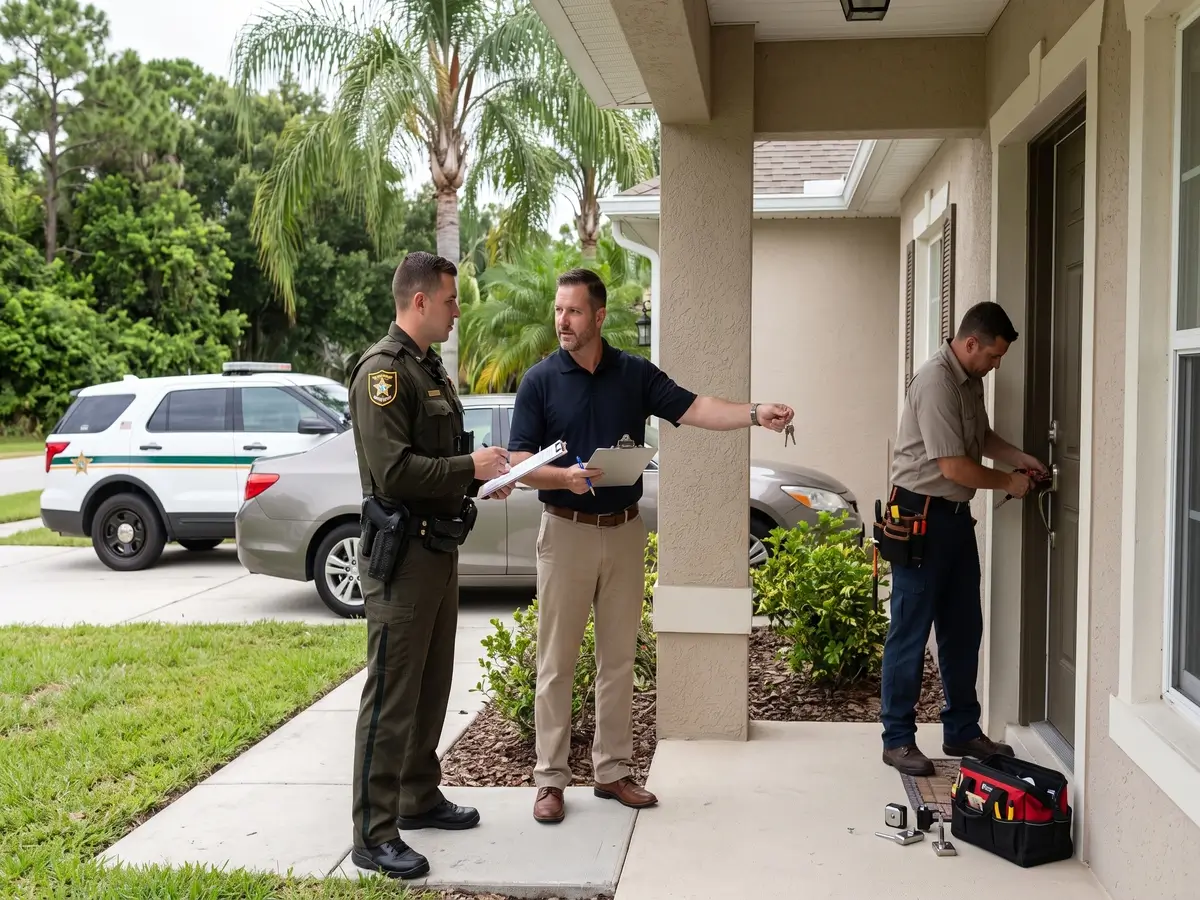
The sheriff confirms the filer is the record owner or an authorized agent. Deputies then serve a notice to vacate immediately, either by hand or by posting it on the front door, and put the owner back in possession.
Changing Locks with a Deputy on Standby
You can ask the sheriff to stand by while locks are changed and the occupants' belongings are moved to or near the property line. Expect the same fee as serving a writ of possession, plus a reasonable hourly standby rate.
Handled correctly, one complaint and a coordinated lock change can replace months in court.
The fastest removal in Florida still depends on paperwork that can survive scrutiny.
When an Occupant Case Still Belongs in Court
FS 82.036 targets true squatters, not every difficult occupant, so some situations still call for a traditional legal process.
Tenant holdovers: A tenant who stops paying or stays past the lease generally falls under Florida's eviction process in Chapter 83.
Former tenants: Anyone who moved in under an owner-authorized agreement, even an oral one, sits outside the sheriff remedy.
Family members: Immediate relatives of the owner are excluded, even if the arrangement has soured.
Active disputes: Pending litigation over the property blocks the fast-track option.
In these cases, our eviction support helps owners follow the correct path to regaining possession. Misusing the sheriff complaint invites the wrongful removal claims covered below.
The Penalties That Give HB 621 Its Teeth
HB 621 also raised the stakes for anyone running a squatting scheme.
Criminal Consequences for Squatters and Scammers
Fraudulent documents: Knowingly presenting a falsified lease, deed, or other property-rights document is a first-degree misdemeanor.
Intentional damage: Unlawfully occupying a dwelling and intentionally causing $1,000 or more in damage is a second-degree felony.
Rental scams: Advertising a home for sale or rent without legal authority, and since July 1, 2025, renting or leasing a property without lawful ownership or a leasehold interest, is a first-degree felony.
Accountability for Owners, Too
The protection runs both ways. Anyone wrongfully removed can recover damages, triple the fair market rent, court costs, and attorney fees.
These penalties make accuracy just as important as speed.
How Pinecrest Landlords Can Stay Squatter-Proof
The best squatter strategy is making your property a poor target.
Schedule regular drive-bys and interior checks during every vacancy, renovation, or hurricane-season evacuation.
Keep mail, landscaping, and exterior lighting looking active so the home never reads as abandoned.
Store your deed, ID, and any agent authorization in a place where you can produce them immediately.
Shorten vacancy windows with smarter rental marketing and thorough tenant screening.
Our maintenance coordination adds another layer, putting trusted eyes on the property regularly.
FAQs about Removing Squatters in Florida
Can I change the locks myself if someone moves into my vacant rental?
Acting outside the statute can expose you to liability, so the safer path is filing the sworn complaint with your county sheriff. Florida shields owners from claims for occupants' belongings only when the removal is not wrongful.
What if the squatter shows me a lease?
The sworn complaint states that any lease produced by an occupant is fraudulent if the owner did not authorize it, and that presenting a fake lease is a crime. If the document could be genuine, speak with a Florida real estate attorney before filing.
Can a property manager file the complaint for me?
Yes, an authorized agent can submit the complaint along with documents showing authority to act for the owner. That helps owners who live outside South Florida.
Take Back Your Keys and Keep Them
A rental that looks watched is a rental squatters tend to skip.
Florida now provides landlords with a faster way to remove squatters, but FS 82.036 applies only when all conditions are met, and all documents are ready. The sheriff relies on your sworn statements, so a missing deed, unclear agent authorization, or rushed complaint can stall the process or expose you to a wrongful removal claim. Speed comes from preparation, not shortcuts.
Owners who regain possession the quickest are the ones who spot trouble early, file accurately, and recognize when a situation belongs in eviction court. A vacant home that gets checked every week rarely gives a squatter time to settle in.
Clear records and a trusted local team turn a stressful discovery into a calm, well-documented response.
At Rovira Property Management, we help owners in Pinecrest, Miami, Coral Gables, and across South Florida keep their rentals protected through routine inspections, vacancy oversight, and careful screening that keeps squatters from ever getting comfortable. When something does go wrong, we move quickly to document the situation and coordinate the right next step with you.
Call us at (888) 669-0096 or explore our Miami property management services to keep your investment secure, occupied by the right people, and fully in your control.